Voice-first discovery
Document your business processes through conversation.
The knowledge is already in your business. It is in the person answering the phone, preparing the quote, dispatching the job, or keeping the cases moving.
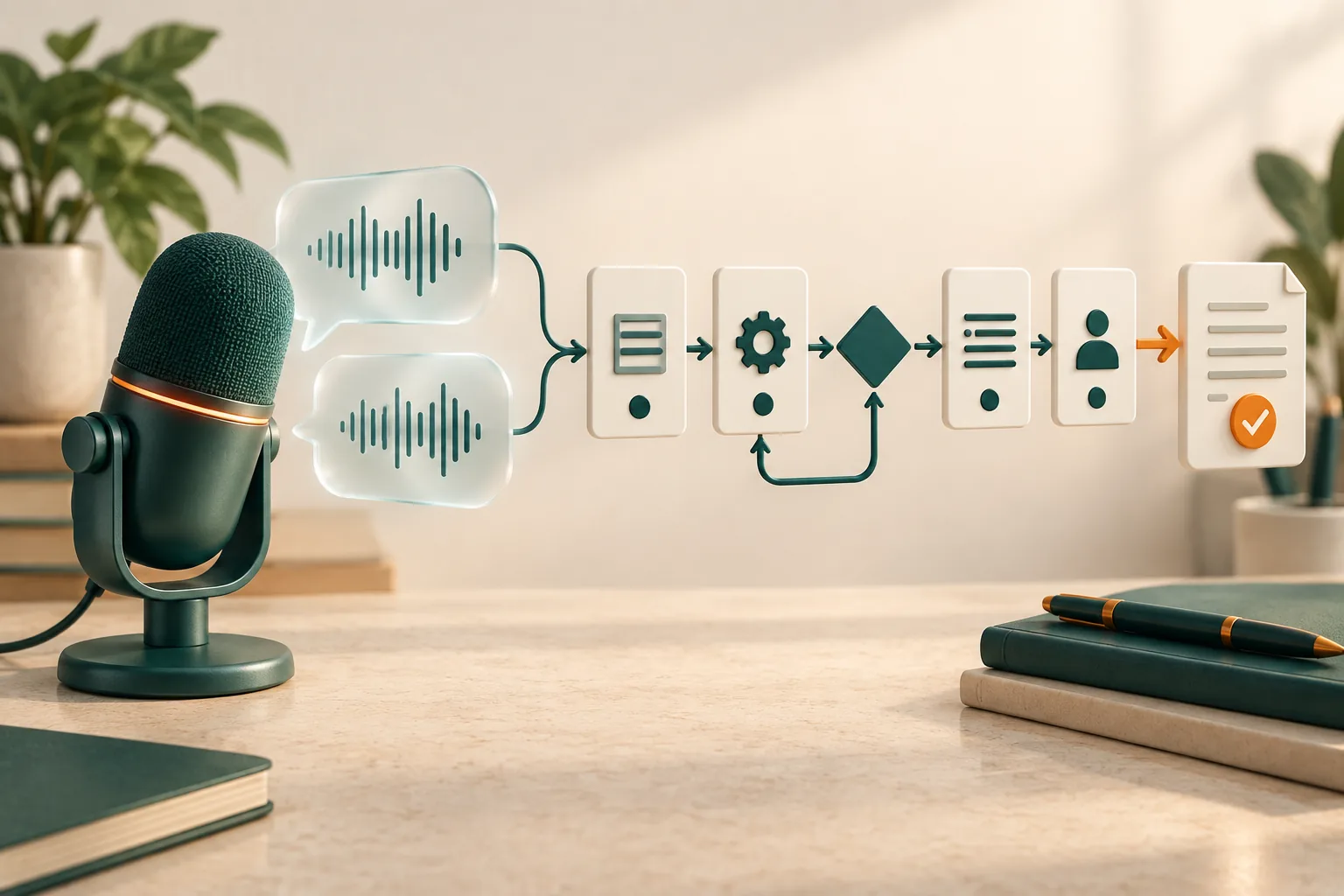
The AI Process Analyst is Digital Profit Group’s voice-first process discovery offering. It uses guided interviews to capture current steps, people, tools, handoffs, and bottlenecks, producing a process record for the people doing the work to review and correct.
What is process discovery?
Process discovery documents how work currently happens: what starts it, who performs each step, which information and tools are used, where decisions occur, and what counts as completion. It should capture exceptions and workarounds as well as the normal path. The current process is confirmed before a redesigned process is proposed.
Start with the work people actually do.
A process document can describe the official steps and still miss the real work: the follow-up message, the spreadsheet kept on the side, the person everyone asks when something goes wrong.
A guided conversation makes room for those details. It asks what happens next, who is involved, what information is needed, and where work waits.
From conversation to a reviewable process.
Choose one workflow.
Appointment booking. Quote follow-up. New-customer onboarding. Job handover. Case resolution.
Pick a process with a recognizable beginning and end.
Talk to the people who do it.
Walk through a real example. Capture the usual path and the exceptions that create extra work.
Bring the steps into view.
Document the people, actions, information, tools, and handoffs described in the conversation.
Surface the friction.
Look for waiting, repeated work, missing details, uncertain ownership, and possible root causes to investigate.
Review and confirm.
The people who know the work check the output. Correct gaps and distinguish observations from assumptions before deciding what to improve.
What you can expect to review
- The current sequence of work.
- Who owns each step and where handoffs occur.
- The information and tools involved.
- Bottlenecks, exceptions, and possible causes.
- Candidate quick wins and questions for further investigation.
- Supporting statements connected to the findings.
The output is a starting point for informed improvement. It does not make an unverified interview statement a proven fact.
A conversation that goes beyond the obvious.
Illustrative excerpt
Analyst: What happens after you send the quote?
Team member: I wait for a reply. If it has been a while, I try to remember to follow up.
Analyst: Where do you keep track of which quotes need that follow-up?
Team member: Mostly in my inbox. Sometimes in a spreadsheet.
Analyst: What happens when someone else needs to pick it up?
This conversation points to a question worth investigating: is follow-up ownership clear and visible to the team?
It is an example of the method, not a recorded customer interview.
Before the conversation
Choose someone familiar with the process. Bring a normal example and an exception. Know which workflow you want to discuss.
You do not need to prepare a polished presentation. You do need to tell the story of what actually happens.
Recording, transcription, access, and information-handling arrangements should be explained before the session starts. Do not include sensitive customer information simply to make an example more realistic.
Questions about the Process Analyst
How long does it take?
That depends on the scope, the number of people involved, and how much variation the process contains. Agree the session scope before starting; a full operation may need more than one conversation.
Can different people describe different parts of the process?
Yes, that can be part of the discovery scope. Differences between accounts are useful questions to resolve rather than details to silently smooth over.
What if the output is wrong?
Review is part of the process. The people who do the work should confirm the steps, identify missing context, and correct inaccurate interpretations.
Does it build the automation?
The Analyst captures and examines the current work. Implementation is a separate step. Discovery Studio can help prioritize and plan the improvements.
Is a call started when I submit the form?
No. The website form requests a discovery conversation. The session and any access requirements are confirmed separately.
Prepare one real example.
Our process discovery interview questions can help you choose a workflow and the people to involve.
Get the process out of your head.
Start with one person and one workflow. Turn what they know into something the business can review and improve.