See the work
A clearer picture of what DPG does.
The best way to understand a solution is to see the work it helps with and the output it produces.
Explore these examples, then choose the starting point that fits your business.
These are illustrative scenarios, not customer case studies or measured results.
Beacon: from missing information to a practical fix

The situation: A local business wants customers to find a service it already provides.
What is reviewed: How that service appears in the relevant business information, whether details are consistent, and what visibility evidence is available within the check.
Example finding: The main description does not clearly explain the service.
Example recommendation: Update the relevant information so the service is accurately described and consistent across the agreed listings.
What the owner receives: A documented finding, its source, and a recommended next action.
What this does not establish: A guaranteed ranking or recommendation outcome.
Your AI Staff: a scheduling request with boundaries

The situation: A customer asks to move an appointment.
The routine path: Identify the request, check permitted options, and prepare or perform the next action within the agreed rules.
The exception: The requested time requires a commitment outside the normal schedule.
The handoff: Send the relevant context to a person instead of making the commitment automatically.
What the owner receives: A workflow with a defined normal path and an explicit exception path.
What stays human: Decisions outside the role’s authority.
Discovery Studio: choose between possible improvements

The situation: Quotes are approved, but jobs still wait before scheduling.
The questions: Is approval visible? Is job information complete? Who owns the handoff? Which system holds the current status?
The alternatives: Clarify ownership, improve the information captured, connect the handoff, or automate an appropriate repeatable step.
What gets compared: Expected value, effort, cost, dependencies, and the quality of the supporting information.
What the owner receives: A recommended sequence with assumptions visible.
What stays uncertain: Estimated savings until the change is implemented and measured.
AI Process Analyst: uncover the hidden handoff
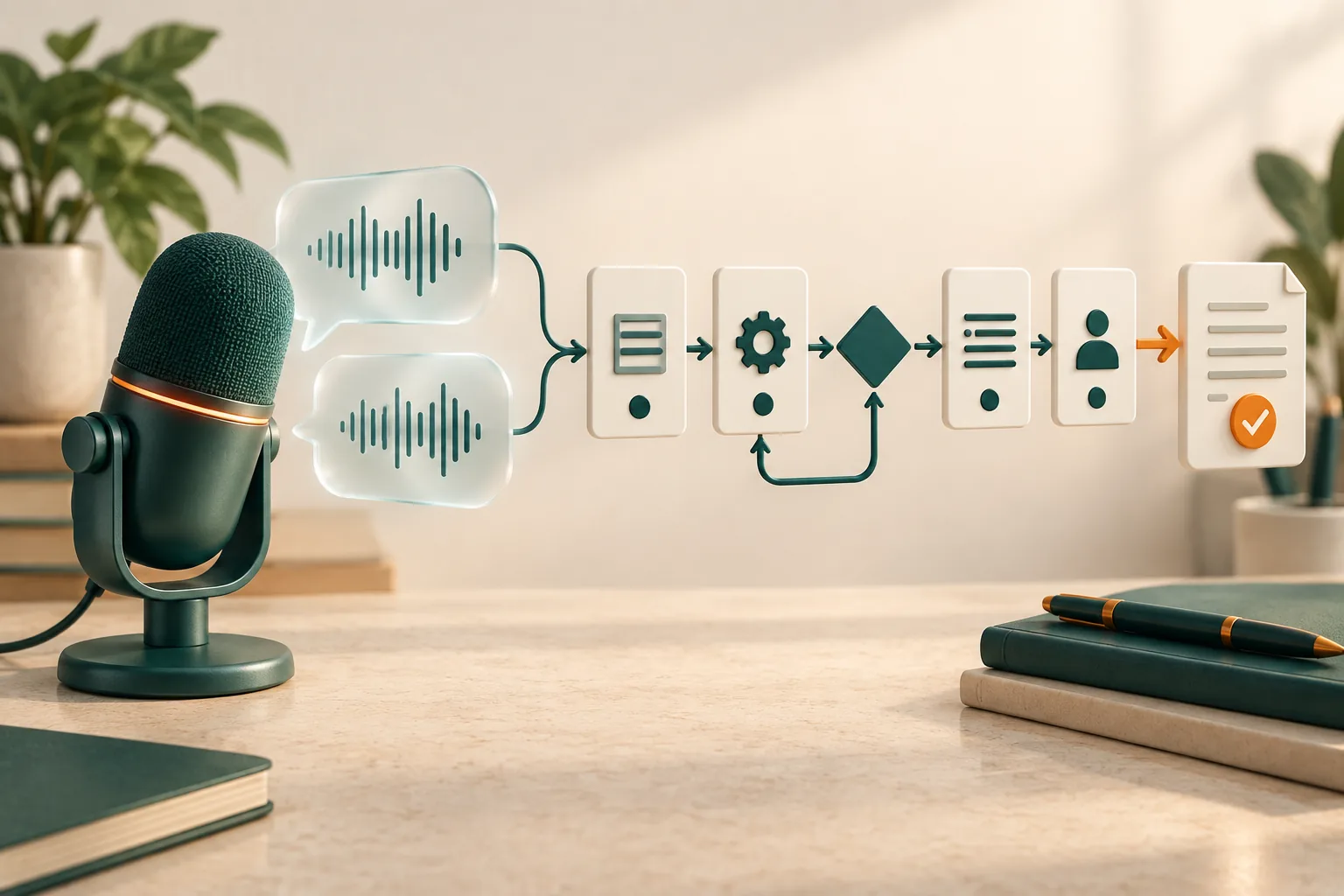
The situation: One team member knows how to move a job from accepted quote to scheduled work. Others rely on asking them.
The conversation: Walk through the last job. Identify the trigger, the information needed, who was contacted, and where it waited.
The finding to review: The handoff depends on information held by one person rather than a shared, explicit process.
What the team receives: A draft of the current steps, the described ownership, and questions to resolve.
What happens next: People who do the work confirm or correct the picture before changes are planned.
What would this look like in your business?
Bring a real task, process, or visibility question. We can discuss which example is closest and what would need to change for your situation.